NFT Marketing

Written by Barry Eichhorn
Owner & AI Advisor
What is an NFT?
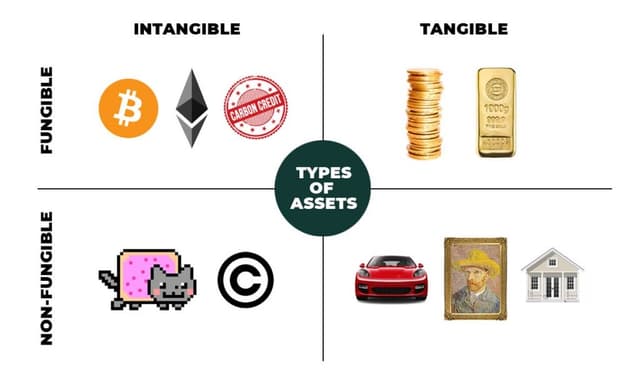
The word NFT, in the combination NFT marketing, stands for Non-Fungible Token. This means that it is non-exchangeable and irreplaceable and that the traded item has a digital certificate of ownership. But what exactly does non-fungible mean? A traded item is "fungible", in other words interchangeable, if individual units of it are mutually exchangeable and indistinguishable.

Let's give an example:
If, for example, you go to the baker's, pay in cash and get five euros in change, it makes no difference to you whether you get a five-euro note or five one-euro coins. It also doesn't matter to you whether the note is taken from the top of the pile or the bottom, or whether it comes out of the baker's trouser pocket. In every scenario you leave the shop with five euros, because money and currency are generally fungible. Every note is interchangeable with, and indistinguishable from, another unit.
On the other hand, if you buy a real Van Gogh painting, you actually want to receive that painting and not a second-hand replica. Although both are works of art, the paintings do not have the same value, and they are not interchangeable. In other words, the Van Gogh painting is not replaceable (non-fungible).
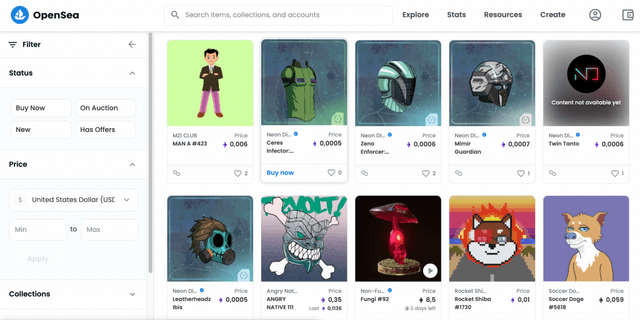
An NFT is a digital certificate of ownership of a traded item that cannot be exchanged for another object. NFTs can be sold and traded online. A sophisticated system, also known as the blockchain, keeps track of which unique NFTs exist and protects them with a unique code. In other words, NFTs allow people to own and trade digital assets, as opposed to physical, tangible assets. NFTs are seen as future property for, for example, the metaverse. An example of a platform where you can buy NFTs is OpenSea.
Examples of NFTs and their protection
NFTs come in different forms. Examples of NFTs are videos, images, digital artworks and tweets. The cryptographic tokens can be linked to virtually any digital file.
But how does this process work? It starts with encoding a traded item. A unique digital hash is assigned. It ensures that every NFT is truly unique. There is no central authority that issues and regulates NFTs. Instead, a decentralised open-source blockchain such as Ethereum circulates and verifies most NFTs!
When you buy an NFT, a unique identification code is encoded in the token, in other words the certificate of ownership. This certificate is then distributed across the entire network, so that anyone with access to the blockchain can see it, but only the owner can gain access, with the unique certificate serving as the key to the NFT.
Why is NFT marketing important?
NFTs can quickly become worth more. An NFT marketing strategy is a crucial part of an NFT's success. In an exponentially growing NFT market, competition keeps increasing. To sell an NFT for the highest possible price, the NFT project has to stand out in every respect. You want to create a buzz around the NFT and get as many people as possible excited about becoming part of the NFT community. You want to show people why your NFT project is the best, so as to create a hype that everyone wants to take part in.
Through targeted NFT marketing campaigns you can spread a clear message, content and your ideas, and make sure people easily get access to the community and join it. Marketing contributes to communication and to reaching the potentially interested target audience. The more people follow the NFT project and want to get hold of an NFT, the higher the eventual value of the NFT.
How does NFT marketing work?
The first step in NFT marketing is developing the marketing strategy. Who is your target audience? What content are we going to use? On which online channels do we distribute the content? What is the goal we want to achieve with the NFT?
After the strategy has been developed and the platforms have been set up, such as a website and, for example, a Discord server, the marketing campaigns can be built. The campaigns target different audiences in a focused way and in turn build unique data themselves, which is used to sharpen the targeting further. Think of audiences based on website visits, people who have taken an action, and lookalikes of the people who are already part of your NFT community.
Channels used for this include TikTok, Twitter, Facebook, Instagram, YouTube, Telegram, Clubhouse, Reddit, LinkedIn etc. By pushing targeted marketing campaigns with NFT content to audiences via paid ads, many interested people are reached worldwide and your NFT community grows.
At BE Digital we specialise in NFT marketing and running targeted marketing campaigns. Curious about the possibilities? Feel free to get in touch with us.